The global automotive landscape is on the cusp of its most dramatic transformation since the assembly line. For years, the electric vehicle (EV) revolution has been hampered by three powerful anxieties: range, charging time, and cost. Consumers have tolerated trade-offs, accepting a shorter driving radius or a 30-minute coffee-and-charge pit stop as the necessary price of admission into a cleaner future. However, a silent, relentless war is being waged in laboratories and gigafactories around the world—a war fought with silicon, solid electrolytes, and revolutionary cell structures. The result is a looming breakthrough in battery technology that promises to not only solve these anxieties but completely redefine what a car is, how it’s built, and how much it costs.
The data is clear: the current generation of EVs, powered primarily by mature lithium-ion (Li-ion) chemistry, is about to be leapfrogged by a spectacular wave of innovation. This isn’t incremental progress; it’s a fundamental shift that will accelerate the demise of the internal combustion engine (ICE) and usher in an era of effortless electric mobility.
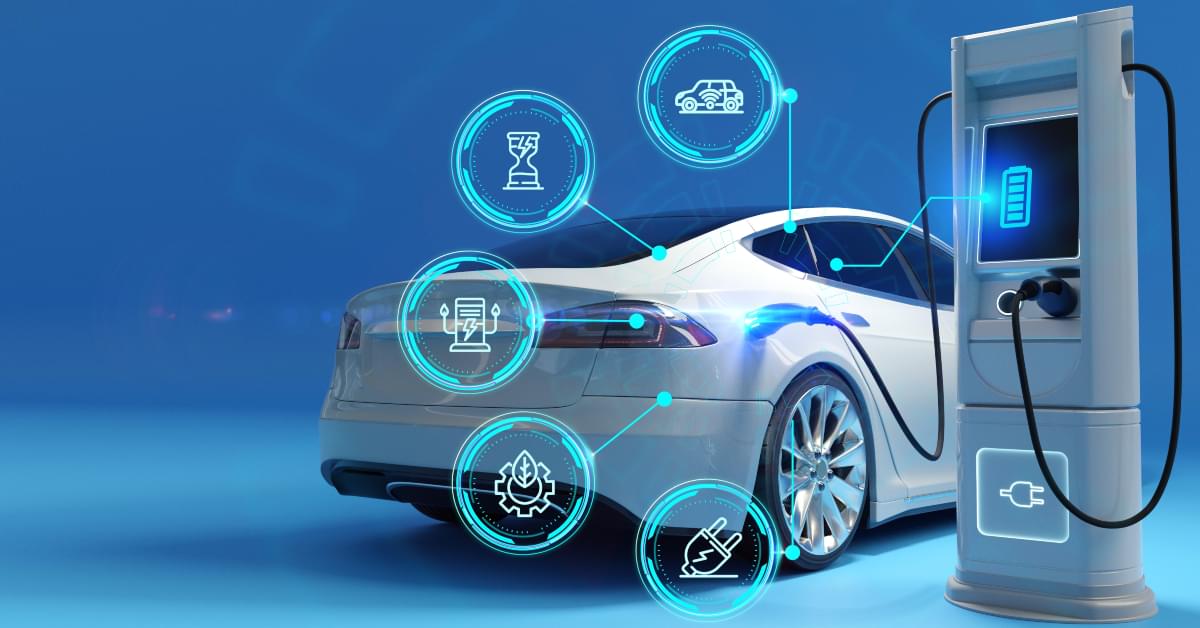
The Solid-State Revolution: The Tipping Point for Range and Safety
At the core of this imminent transformation is the Solid-State Battery (SSB). For decades, the conventional Li-ion battery has relied on a flammable, liquid or gel electrolyte to shuttle lithium ions between the anode and cathode. This liquid is the source of the thermal runaway risk that causes high-profile battery fires and, ironically, limits the ability to charge quickly without generating excessive heat.
SSBs replace this liquid electrolyte with a solid material—typically ceramic, glass, or a polymer. This simple change unlocks a cascade of game-changing advantages that constitute the biggest breakthrough in energy storage since the invention of the Li-ion battery itself:
-
Shattering the Range Barrier: Solid electrolytes are chemically more stable and allow for the use of a pure lithium metal anode. Lithium metal has a theoretical capacity nearly ten times greater than the graphite anodes currently in use. This higher energy density means engineers can pack significantly more power into a smaller, lighter battery pack. The projection is staggering: SSBs are expected to enable EV ranges of 600 miles (nearly 1,000 kilometers) on a single charge—a figure that definitively ends range anxiety for almost every driver on the planet.
-
The 10-Minute Charge: Without the risk of a liquid electrolyte overheating, the battery can handle higher charging rates. Automakers like Toyota and new battery start-ups are aggressively targeting ultra-fast charging times of 10 minutes or less to reach an 80% state of charge. This is the ultimate tipping point; it makes refueling an EV as fast, if not faster, than a traditional gasoline stop.
-
Unmatched Safety and Longevity: The solid nature of the electrolyte eliminates the flammability risk, making the battery fundamentally safer. Furthermore, SSBs are projected to have a significantly longer cycle life—potentially enduring 8,000 to 10,000 cycles compared to the 1,500 to 2,000 of today’s cells. This extended lifespan will not only reduce the total cost of EV ownership but also dramatically increase the pool of second-life batteries available for grid storage.
While mass production challenges still exist, the timelines are tightening. Experts predict that SSBs will begin appearing in premium EVs between 2026 and 2028, rapidly accelerating their adoption into the mass market shortly thereafter.
The Race for Affordability: Driving Down the Price of Electrification
The biggest headline of the past two years has been the dramatic price collapse of the battery pack. Industry analysts like BloombergNEF reported an astonishing 20% drop in average battery pack prices in a single year, pushing the average price to around $115 per kilowatt-hour (kWh). This decline is not accidental; it’s the result of innovation and intense manufacturing competition, primarily driven by Chinese gigafactories.
The critical milestone is the $100/kWh price point—the moment an EV’s bill of materials is projected to reach cost parity with a comparable ICE vehicle on an unsubsidized basis. This benchmark is now forecasted to be reached by 2026 for the industry average, with some key players in China having already achieved it.
This acceleration is powered by alternative chemistries that prioritize cost and sustainability:
-
Lithium Iron Phosphate (LFP) Batteries: Though lower in energy density than the dominant Nickel-Manganese-Cobalt (NMC) cells, LFP batteries are significantly cheaper, safer, and last longer. The iron and phosphate are more abundant and ethically sourced, and LFP cells tolerate a 100% daily charge better than NMC. They have become the backbone of affordable, shorter-range vehicles and commercial fleets, accelerating EV adoption in markets like China.
-
Sodium-Ion (Na-ion) Batteries: The most cost-effective contender, Na-ion batteries replace lithium with the far more abundant and cheaper element, sodium. While their energy density is currently half that of Li-ion, their ultra-low cost makes them an immediate game-changer for short-range city cars, two-wheelers, and grid storage. The development of this technology is a crucial step towards decoupling the EV market from volatile global lithium supply chains.
The combination of the $100/kWh tipping point and the deployment of more affordable chemistries is the economic weapon that will ultimately defeat the ICE. As prices fall, the inherent lower running costs of an EV (less maintenance, cheaper ‘fuel’) will make the total cost of ownership (TCO) overwhelmingly favorable, finally moving the transition from a government-mandated shift to a consumer-driven stampede.
Beyond the Cell: Architecture and Infrastructure
Battery innovation extends beyond chemistry and structure; it is also fundamentally changing the vehicle’s electrical architecture. The adoption of 800-volt systems is a core enabler of ultra-fast charging. By doubling the voltage over the traditional 400-volt standard, cars can charge at higher power (up to 350 kW and beyond) without the need for thicker, heavier, and more expensive cabling. This architecture is already present in premium models like the Porsche Taycan and Hyundai IONIQ 5, and its rapid adoption will soon make 10-to-15 minute charging the new industry standard.
The synergy between these advances—Solid-State for range and safety, LFP/Na-ion for cost, and 800-volt systems for speed—is creating a perfect storm for the automotive industry. It is forcing traditional automakers and new electric competitors to rethink everything from material sourcing to factory floor design. The future of electric vehicles is not simply an evolution of the car; it is the electrification of the entire energy ecosystem. With longer-life, higher-capacity batteries, EVs are also becoming critical assets for grid stability through Vehicle-to-Grid (V2G) technology, turning a parked car into a mobile power bank that can sell electricity back to the home or utility during peak demand.
In the next five years, the barriers that once kept consumers from electric mobility will dissolve. Range will exceed necessity, charging time will be reduced to a convenience stop, and upfront costs will be competitive with gasoline models. This battery revolution is not just transforming the car; it is completing the shift to a cleaner, faster, and more economically compelling transport system.
News

Warum nur Manstein die Schlacht bei Kursk hätte gewinnen können
Mai 1943, 04:00 Uhr. Das Hauptquartier der Heeresgruppe Süd lag eingebettet in einem Komplex requirierter Gebäude nahe Saporischschja, östlich des Dnjepr. In einem fensterlosen Raum im zweiten Stock starrte Generalfeldmarschall Erich von Manstein auf eine großformatige Karte der Ostfront. Das…

Julius Caesar veränderte die Geschichte auf unvorstellbare Weise!
War Julius Cäsar dazu bestimmt zu herrschen oder unterzugehen? Wie konnte ein einfacher General es wagen, Roms mächtigste Männer herauszufordern und sich als Herr der Welt zu etablieren? Willkommen bei Saghon, wo Geschichte zum Leben erweckt wird und jedes Video…

Die Fußfäule der Königin breitete sich so weit aus, dass der Gestank den gesamten Palast durchdrang – ein Geruch, schlimmer als der Tod selbst.
Der Geruch der Verwesung in den Privatgemächern von Königin Caroline im St. James’s Palace war so überwältigend, dass selbst erfahrene Bedienstete an der Schwelle zögerten. Es war nicht der Geruch einer frisch zugefügten Wunde oder der scharfe medizinische Stich von…

Die schrecklichen letzten Tage Heinrichs VIII. – Der König, der innerlich verweste.
Die letzten schrecklichen Tage von Heinrich VIII. – Der König, der von innen heraus verfaulte Der Gestank war bereits aus drei Zimmern Entfernung wahrnehmbar. Bis zum Januar 1547 verrottete der mächtigste Mann Englands bei lebendigem Leibe. Heinrich VIII. war zu…

Mit 13 Jahren schwanger vom zukünftigen König von England – Lady Margaret Beauforts tragische Geschichte war schlimmer als der Tod.
Stellen Sie sich Folgendes vor: Der Schrei eines Mädchens hallt in einer Winternacht des Jahres 1457 durch die Steinkorridore von Schloss Pembroke. Das Geräusch schneidet wie eine Klinge durch Seide durch den heulenden Wind. In einer Kammer, die nur von…

Maria Tudor, Schwester von Heinrich VIII.: Die Prinzessin, die sich für die Liebe entschied und alles verlor – Ihre finsteren letzten Tage waren schlimmer als der Tod.
Mary Tudor kam als Versprechen zur Welt, nicht als Person. Geboren im Jahr 1496 als jüngstes überlebendes Kind von Heinrich VII. und Elizabeth von York, wuchs sie in Palästen auf, in denen jeder Korridor sie daran erinnerte, dass sie nicht…
End of content
No more pages to load