22 June 1000 941 Dawn breaks over the Eastern frontier as the largest military invasion in human history begins. Columns of German armor roll across the dusty roads toward the Soviet Union. Engines roaring under a sky already blackened by smoke. Villages wait to the sound of artillery. Trains packed with refugees choke the rail lines.
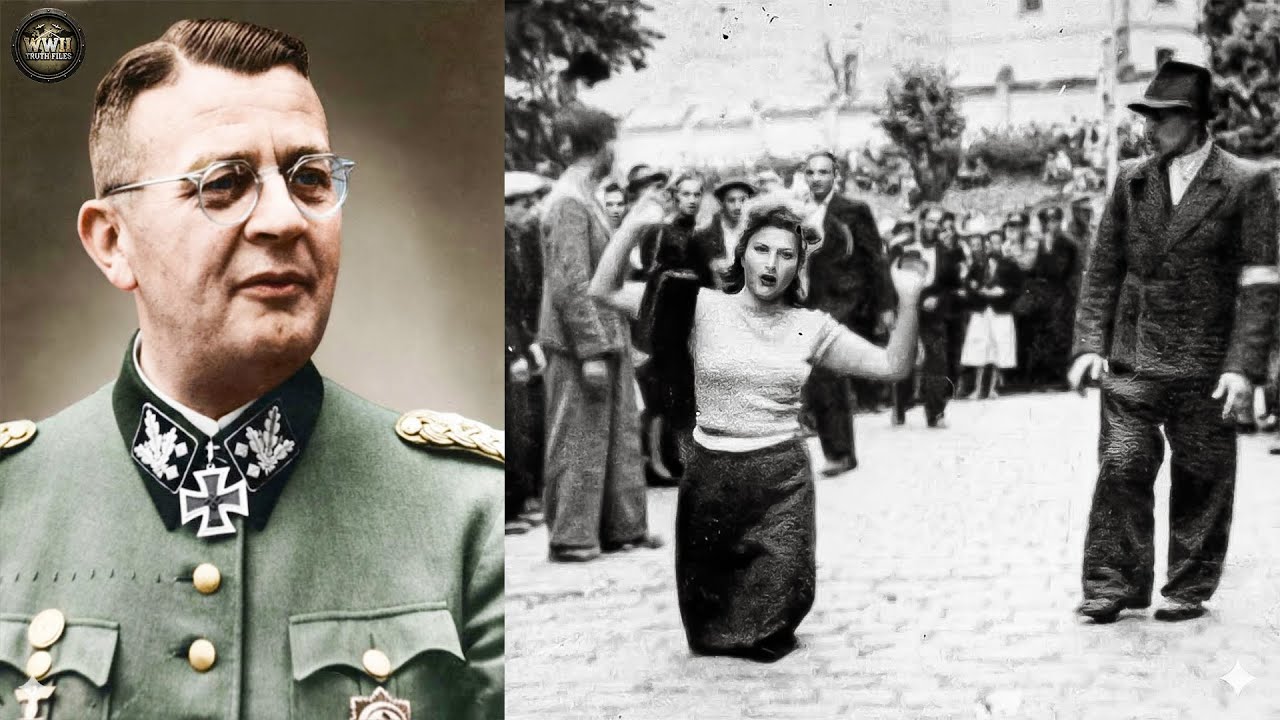
Within days, Bellarus, a land long under Russian rule, collapses under the shock of Operation Barbarasa. Minsk falls in a single brutal sweep and the occupiers waste no time imposing their new order. Ghettos are sealed. Families vanish. Entire communities disappear into the machinery of racial policy. Amid this vast upheaval, one figure rises quickly within the new hierarchy of terror. Eric vonm Bakilfki.
Behind the chaos of the front, he begins shaping a campaign whose impact will define the fate of hundreds of thousands across Bellarus and beyond. Eric Julius Ebahad von Bbachki entered the world on one March 1,899 in the modest town of Lembborg, then a quiet corner of the German Empire. Though he would later rise through an institution obsessed with racial hierarchy, his own roots were far from the purity the regime demanded.
He came from a Kashubian family, a Slavic minority in northern Poland, and at home, the rhythms of Kashubian and Polish mixed freely with German life. His family’s long association with the Catholic Church shaped his earliest years, though he would eventually drift toward Protestantism in adulthood. His childhood was marked not by privilege but by loss.
His father, once a landowner, was forced into the life of a traveling salesman before dying when Eric was only 12. The family estate was gone and the seven children were sent to different foster homes across East Prussia. In these scattered years, hardship carved itself into the boy’s character. When World War I erupted in 1914, the upheaval seemed almost familiar.
By December at just 15, he volunteered for the army, stepping into a conflict that would shape the rest of his life. The end of the first world war did not bring peace to Eric von Dembbach Salefki. It left him restless, shaped by wounds, both physical and internal. He remained in the German military fighting in the Slesian uprisings, a series of bitter clashes that hardened his sense of identity and left him deeply hostile toward Poland and the shifting borders of the region.
In 1921, he married Ruth Abfeld and together they would have six children. Yet domestic life never softened the direction he was heading. Germany in the 1,92 seconds was a nation’s searching for certainty and Bach Zelefski found his among the voices promising order, hierarchy, and revenge. In July 1930, he joined the Nazi party drawn to its promises of restored strength and national rebirth.
Just months later, in February 1931, he entered the SS, an organization whose rigid ideology and culture of loyalty matched both his ambition and his growing desire for authority. Within the movement, he sought not just belonging, but advancement. The chaos of the early 1,930 seconds offered opportunity for those willing to act decisively, and Bakalki stepped into that opening.
The political violence unfolding across Germany, street battles, targeted killings, purges was a proving ground, and he committed fully. Each step aligned him more deeply with the radical worldview that would soon reshape Europe. When war returned to Europe on 1 September 1,939, Eric von Dembbachski found himself positioned to shape the unfolding conflict.
Nazi Germany’s invasion of Poland brought him directly into the machinery of occupation. As Heinrich Himmler’s deputy for East Sillesia, he implemented racial and settlement policies with administrative precision. Under his oversight, more than 18,000 Poles were expelled from their homes in a single operation. Their properties seized to make way for ethnic German settlers.
It was here in these early months of the war that he recommended the establishment of a new concentration camp near Ashvincim known to the world today as Ashvitz. He inspected the site personally shortly after the first transport of prisoners arrived in June 1940. The escalation came swiftly with the launch of operation Barbarasa on 22 June 1,941.
Bark Zalvki was appointed higher SS and police leader for central Russia, a position that placed him at the center of the regime’s most destructive policies. He coordinated closely with Enzat’s grouper B, one of the mobile killing units that followed the veh into newly captured territories. These squads, backed by police battalions and local auxiliaries, carried out mass shootings across Bellarus, Latvia, and eastern Poland.
By August 1941, reports sent under his authority counted over 30,000 people already murdered. In Ria, operations under his command contributed to the killing of 35,000 civilians across Belarus and eastern Poland. More than 200,000 were targeted Jews, political prisoners, and local civilians viewed as obstacles to German control.
The killings were systematic, recorded, and carried out with the intention of transforming entire regions into spaces for German settlement. His role expanded as the war deepened. On 9 November 1,941, he was promoted to SS Oberg and Fura, equivalent to left tenant general. Yet, the scale of violence began taking a visible toll.
By early 1942, he was hospitalized in Berlin, officially for intestinal ailments related to opium use. Privately, he was reported to suffer hallucinations connected to the shootings he had overseen an internal breakdown, the regime carefully concealed. Still, his absence was brief. When he returned to duty, he requested reassignment, and the SS found a new function for him, one that aligned perfectly with their unfolding strategy.
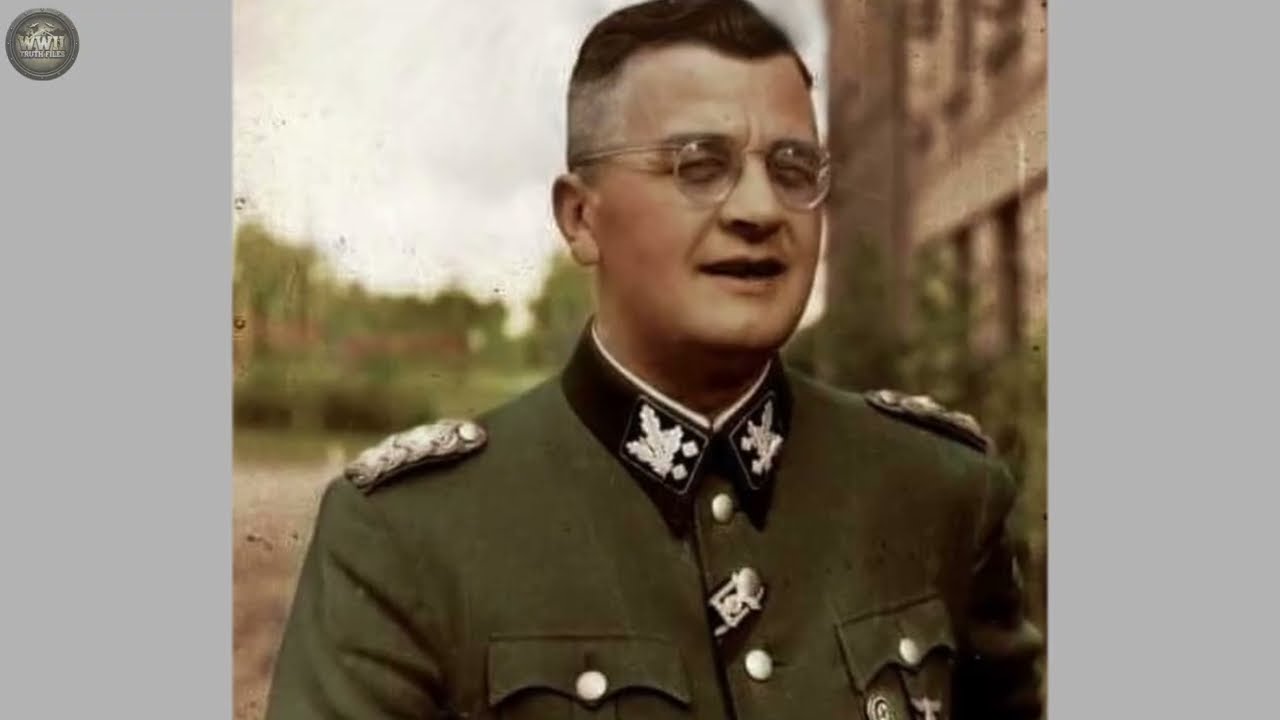
He was placed in command of Bandon Camp for Bender, the SS formations tasked with combating bandits, a term that in Nazi records often meant entire villages suspected of aiding partisans. These operations blurred the line between counterinsurgency and genocidal policy. units under his control burned settlements, executed civilians, and deported entire populations while inflating reports of partisan casualties to justify further campaigns.
By 1943, Bakalefki’s operations stretched across much of occupied Eastern Europe. Though Bellarus and Western Russia remained the core of his activity, the devastation left behind was vast. Communities erased. forests hiding the remnants of mass graves and survivors scattered or deported.
His reports to Berlin listed success after success, but military gains remained minimal. In reality, the campaigns created landscapes of ruin without altering the strategic course of the war. In early 1944, he briefly joined frontline combat near Kovville in present-day Ukraine, but his health quickly deteriorated. Still his importance to the regime did not diminish.
On 1 July 1,944, he received the rank of general of the Waffan SS. And barely a month later, his most notorious assignment began. On 2 August 1,944, just 1 day after the outbreak of the Warsaw uprising, Bachelki was placed in command of German forces tasked with crushing the rebellion. The units under him included regular police, SS formations, and the infamous Derlaw Brigade, a group composed of convicted criminals and violent offenders led by Oscar Derlawanganger, a man with a documented history of abusing minors and known for his brutality. The advance
into Warsaw became one of the defining atrocities of the war. Approximately 200,000 civilians died under his command. Over 65,000 were executed in organized mass shootings. The rest perished in fires, bombardments, or as part of systematic reprisals. The WA massacre stands among the most chilling episodes.
Entire districts were emptied and destroyed. Men, women, and children shot on site in an operation that left entire neighborhoods abandoned. For his role, Bachelki received the Knight’s Cross of the Iron Cross on 30 September 1,944. Days later on 4 October he personally accepted the surrender of Tedosh Bor Kamarovski leader of the Polish home army.
Amid the ruins of Warsaw one small detail emerged that revealed the strange mixture of opportunism and curiosity that had shaped his life. He reportedly salvaged the heart of the composer Friedderick Shopan holding it temporarily as a personal relic before it was eventually returned to Warsaw’s Holy Cross Church. His assignments continued. In October 1944, Hitler dispatched him to Budapest where he helped remove Regent Miklos Horthy and install the Fascist Aroc Cross Party under Ference Shally, deepening the persecution of Hungary’s Jews in the
final months of the war. By the time the conflict ended in Europe on 8th May 1,945, Bachelki had contributed directly to some of the most devastating civilian losses in Nazi occupied territories. His name appeared throughout reports, directives, and testimonies. The territories he left behind bore scars, mass graves, destroyed towns, and communities that would never return.
The collapse of Nazi Germany in the spring of 1,945 left Eric von Dembbachski without the protection of the regime he had served for more than a decade. When the Red Army closed in and German defenses crumbled, he abandoned his post and went into hiding, attempting to disappear into the chaos of a defeated nation.
His escape was short-lived. On one August 1,945, US military police arrested him, bringing an abrupt end to his efforts to evade accountability. He feared extradition to Poland or the Soviet Union, where his actions in Bellarus, Warsaw, and across occupied territories were well documented. Instead, he offered testimony at the Nuremberg trials, openly linking Nazi ideology to mass murder and confirming the cooperation between the Vermachar and the Inzatgrupin.
His statements made him deeply unpopular. Among other defendants, Walter Funk and Herman Guring denounced him as a traitor and a pig. Yet, the testimony worked. He avoided charges for his wartime actions and was released in 1949. His freedom did not last. In 1951, he received a 10-year sentence for the murder of political opponents in the early 1,930 seconds.
Later convictions followed, each tightening the circle that wartime justice had failed to close. The postwar decades brought delayed judgment for Eric von Dembbachski. In 1961, he was finally imprisoned first for manslaughter in the killing of Anton von Hoberg and Bookvolt during the night of the long knives and again for perjury that same year.
His testimony at the trial of Adolf Aishman attempted to shift blame, claiming the Inzats group and operated independently, but the gesture fooled few. In 1962, a German court handed him a life sentence for the murder of communists in the early 1,930 seconds. Yet, despite describing himself as a mass murderer, he never faced prosecution for his central role in the Holocaust.
By March 1972, illness earned him a reprieve and he was transferred to a Munich hospital. He died on 8th March 1,972. Leaving behind a legacy defined not by remorse but by the enduring evidence of the crimes he enabled a reminder of how easily authority can be twisted into destruction. Thank you for watching the World War II Truth Files channel.
If you found this story meaningful, be sure to like, subscribe, and turn on the notification bell so you never miss our upcoming episodes. We appreciate your time and we’ll see you in the next documentary as we continue exploring the events that shaped our
News
Warum nur Manstein die Schlacht bei Kursk hätte gewinnen können
Mai 1943, 04:00 Uhr. Das Hauptquartier der Heeresgruppe Süd lag eingebettet in einem Komplex requirierter Gebäude nahe Saporischschja, östlich des Dnjepr. In einem fensterlosen Raum im zweiten Stock starrte Generalfeldmarschall Erich von Manstein auf eine großformatige Karte der Ostfront. Das…
Julius Caesar veränderte die Geschichte auf unvorstellbare Weise!
War Julius Cäsar dazu bestimmt zu herrschen oder unterzugehen? Wie konnte ein einfacher General es wagen, Roms mächtigste Männer herauszufordern und sich als Herr der Welt zu etablieren? Willkommen bei Saghon, wo Geschichte zum Leben erweckt wird und jedes Video…
Die Fußfäule der Königin breitete sich so weit aus, dass der Gestank den gesamten Palast durchdrang – ein Geruch, schlimmer als der Tod selbst.
Der Geruch der Verwesung in den Privatgemächern von Königin Caroline im St. James’s Palace war so überwältigend, dass selbst erfahrene Bedienstete an der Schwelle zögerten. Es war nicht der Geruch einer frisch zugefügten Wunde oder der scharfe medizinische Stich von…
Die schrecklichen letzten Tage Heinrichs VIII. – Der König, der innerlich verweste.
Die letzten schrecklichen Tage von Heinrich VIII. – Der König, der von innen heraus verfaulte Der Gestank war bereits aus drei Zimmern Entfernung wahrnehmbar. Bis zum Januar 1547 verrottete der mächtigste Mann Englands bei lebendigem Leibe. Heinrich VIII. war zu…

Mit 13 Jahren schwanger vom zukünftigen König von England – Lady Margaret Beauforts tragische Geschichte war schlimmer als der Tod.
Stellen Sie sich Folgendes vor: Der Schrei eines Mädchens hallt in einer Winternacht des Jahres 1457 durch die Steinkorridore von Schloss Pembroke. Das Geräusch schneidet wie eine Klinge durch Seide durch den heulenden Wind. In einer Kammer, die nur von…

Maria Tudor, Schwester von Heinrich VIII.: Die Prinzessin, die sich für die Liebe entschied und alles verlor – Ihre finsteren letzten Tage waren schlimmer als der Tod.
Mary Tudor kam als Versprechen zur Welt, nicht als Person. Geboren im Jahr 1496 als jüngstes überlebendes Kind von Heinrich VII. und Elizabeth von York, wuchs sie in Palästen auf, in denen jeder Korridor sie daran erinnerte, dass sie nicht…
End of content
No more pages to load